Introduction: The Strategic Transition in Global Archival Standards
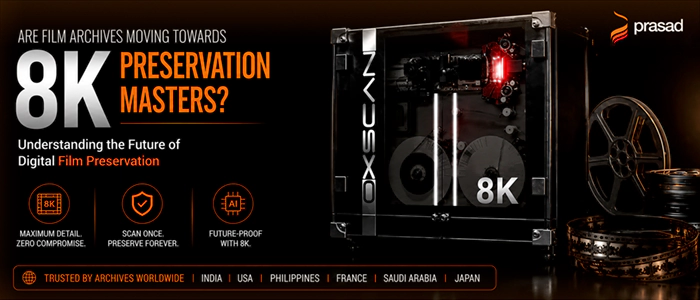
International repositories face a critical decision point: should preservation standards remain anchored at 4K, or migrate to 8K preservation masters? Across India, the USA, Saudi Arabia, Malaysia, and the Philippines, elite archival institutions are actively evaluating this transition. While knowing what 8K film scanning covers hardware mechanics, asset managers must focus on the strategic question that matters: can historically important and fragile film negatives including works by renowned directors survive a future re-scan? The answer driving global adoption is increasingly clear; 8K Preservation Masters eliminate that risk. This shift represents more than a technical upgrade; it’s a fundamental change in how institutions protect cinematic heritage for the next century.
Why Global Archives are Adopting 8K Preservation Masters
The momentum toward 8K is driven by three unavoidable realities that 4K simply cannot solve:
Capturing Film Grain Without Data Loss
Celluloid film stock contains physical grain structure and fine detail information that directly translates to 8K-level native resolution. When you scan at 4K, you’re permanently discarding approximately 40–60% of the information actually present in the original material. Archives cannot recover this data later. 8K scanning captures the complete visual spectrum of the film, ensuring future restoration techniques, including AI-powered algorithms that have the maximum information foundation to work with.
The "Scan Once" Rule: Protecting Fragile Negatives
Here’s the uncomfortable truth: every time historically significant, culturally valuable, and fragile master negatives are removed from climate-controlled vaults and threaded through scanning equipment, they risk physical damage. Tears, scratches, and embrittlement can occur. The archival world’s golden rule has become scan once in the highest resolution possible, then never touch the original again. 8K ensures that a single scan captures enough detail to support decades of downstream restoration work without requiring a re-scan.
AI Remastering Foundation
Future machine-learning algorithms will be exponentially more sophisticated than today’s restoration tools. By providing these systems with maximum raw data density (8K), archives future-proof their investments. A 4K master becomes a constraint; an 8K master becomes a foundation for innovations not yet invented.
The Future of Film Preservation: Growing Adoption and Long-Term Preservation Strategies
The market is evolving in response to two key priorities:
Growing Studio Adoption of 8K Preservation
Major studios are increasingly adopting or evaluating 8K preservation workflows for selected heritage titles as they prepare for future distribution opportunities and long-term preservation requirements. As demand for higher-resolution content and next-generation viewing platforms continues to evolve, 8K preservation masters provide studios with greater flexibility to support future remastering, restoration, and distribution without revisiting the original film elements.
Adoption of 8K preservation may also depend on the nature and significance of the content. For example, Warner Bros. has selectively scanned around 20 heritage films in 8K as part of its preservation strategy.
Long-Term Storage and Preservation Efficiency
Many archival institutions are adopting a “Scan Once” preservation workflow to improve long-term preservation and storage efficiency. Modern LTO (Linear Tape-Open) libraries and enterprise cloud storage systems enable organizations to store a single high-resolution preservation master while generating lower-resolution proxy copies for research and public access. This approach simplifies storage management, reduces the need for multiple master files across different resolutions, and supports sustainable long-term digital preservation.
Both trends point toward the same objective: preserving the highest-quality master today while ensuring flexibility for future restoration, research, and distribution needs.
Technical Specifications for Digital Film Preservation
| Master Asset Tier | Target Format | Compression | Strategic Use Case |
|---|---|---|---|
| Gold Archival Master | 16-bit DPX (8K) | Uncompressed | Absolute historical preservation; raw frame data for future restoration. Never touched, stored in climate-controlled vault or verified enterprise cloud. |
| Mezzanine Delivery | ProRes 422 HQ (4K) | Lossless | Current global broadcasting and OTT streaming. Distributed to studios and broadcasters without exposing the archival master. |
| Research Proxy | H.264 MP4 (HD) | High compression | Low-bandwidth internal database search and scholarly access. Allows researchers to browse without requiring 8K file infrastructure. |
| Master Asset Tier | Target Format | Compression | Strategic Use Case |
|---|---|---|---|
| Gold Archival Master | 16-bit DPX (8K) | Uncompressed | Absolute historical preservation; raw frame data for future restoration. Never touched, stored in climate-controlled vault or verified enterprise cloud. |
| Mezzanine Delivery | ProRes 422 HQ (4K) | Lossless | Current global broadcasting and OTT streaming. Distributed to studios and broadcasters without exposing the archival master. |
| Research Proxy | H.264 MP4 (HD) | High compression | Low-bandwidth internal database search and scholarly access. Allows researchers to browse without requiring 8K file infrastructure. |
FAQs
1. Why choose 8K preservation masters over 4K?
2. Does digital film preservation in 8K require special storage infrastructure?
3. Can damaged or heavily deteriorated old movies benefit from 8K resolution?
4. Is 8K preservation adoption mandatory for all institutions?
Conclusion: Future-Proofing Your Cinematic Heritage
The transition to 8K preservation masters is no longer speculative; it’s underway at major institutions across every continent. For archive custodians, the question is not whether 8K preservation is necessary, but when your institution will adopt it.
The ultimate decision facing modern archive managers is stark: protect your library from chemical decay by implementing preservation standards that won’t require touching fragile originals again. Deploy professional film scanning services built to your organization’s precise preservation master specifications—whether your archive holds 35mm, 70mm, or other theatrical formats. Prasad Corp delivers comprehensive 8K preservation across India, the USA, Saudi Arabia, Philippines, Japan, France securing your cinematic heritage for generations to come.