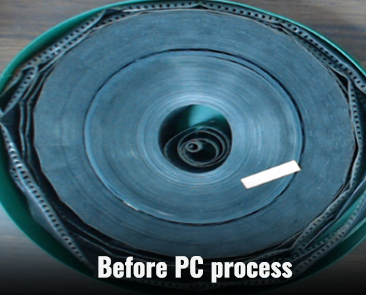

Assess present condition of film and generate inspection report
Inserting leaders for easy handling and registering films with RFID for efficient tracking and management.
Systematic re-arrangement of film cans for optimized storage and access.
Application of specialized treatments to stabilize and conserve the physical integrity of the film reels.
Thorough cleaning processes to remove dirt, dust, and other contaminants from the film.
Skilled repair services to fix damaged reels and restore them to a stable condition.
Utilizing molecular sieves to absorb moisture and prevent further chemical deterioration.
Prasad Corp’s analog restoration and preventive conservation services are recognized globally. With a strong network of partners and facilities in the USA, Europe, and Asia, we ensure that our expertise is accessible to clients worldwide. Our global presence allows us to provide localized support, quick response times, and seamless service delivery, ensuring that your precious film reels receive the best care possible, no matter where you are located.
By integrating these meticulous preservation techniques and leveraging our global reach, Prasad Corp remains at the forefront of safeguarding cinematic heritage for future generations.
Broadcasters, archivists, and media professionals are facing a unique challenge in how to preserve the rich visual and audio history stored on analogue media. From VHS tapes and Betacam to U-matic and other legacy formats, decades of creative work are locked away on formats that degrade over time. Tape digitization has become a critical solution for broadcasters, archivists, and media professionals seeking to protect their content, enable seamless editing, and repurpose archival footage for modern projects.
Tape digitization is the process of converting tape-based audio-visual media into digital files. It’s about more than just making a copy – it’s about capturing the footage clearly, keeping the audio and video intact, and getting it ready for storage and future use.
Tape digitization plays a key role in enabling:
Legacy tapes are vulnerable to physical wear, magnetic decay, and format obsolescence. Without timely tape digitization, valuable video content can be lost forever.
Analogue tapes are inherently fragile. Magnetic media lose signal over time, leading to audio distortion, color fading, or complete loss. Tape digitization captures the footage before irreversible damage occurs. Once converted to digital formats, the content can be stored redundantly across secure storage solutions, ensuring long-term preservation.
Modern post-production workflows rely heavily on digital formats. Digitization converts analogue tape–based media into digital files, enabling editing, restoration, and reuse using contemporary post-production systems.directly is cumbersome and prone to quality loss. By digitizing tapes, Broadcasters, archivists, and media professionals gain the flexibility to:
Digitized media becomes immediately usable, allowing creative teams to breathe new life into decades-old footage.
Advanced digital processing techniques, including SD-to-HD conversion and resolution upscaling (up to 2K or 4K), enable digitized tape-based content to be enhanced and adapted for modern viewing environments. Tape digitization is not just about copying; it’s about improving usability while maintaining authenticity. Through restoration, faded colors can be corrected, grain can be managed, and audio can be cleaned of hisses or dropouts.
This process ensures that legacy media meets contemporary technical standards while preserving the original content’s visual and audio characteristics.
Tape digitization enables analogue tape-based media to be converted into high-quality digital files that can be efficiently preserved, managed, and reused within modern digital environments. Once digitized, content can be standardized, catalogued, and integrated into archival and post-production systems, ensuring long-term accessibility and usability.
Digital formats allow for improved storage, faster retrieval, and compatibility with contemporary workflows, while supporting quality enhancement processes such as colour correction, SD-to-HD conversion, and resolution upscaling. This approach ensures that legacy tape content meets current technical standards while maintaining the integrity of the original recordings.
While upscaling does not create new visual detail, SD footage can be enhanced through advanced processing techniques to improve perceived sharpness, colour reproduction, and overall viewing quality. Standard-definition content is typically upscaled to HD, and with the support of modern, AI-driven technologies, it can be further enhanced to higher resolutions such as 2K and, in select cases, up to 4K, depending on the quality of the original source.
Professional tape digitization requires specialized playback decks, high-quality analogue-to-digital converters, and robust editing software. Key considerations include:
Digitized media must be properly catalogued and backed up. Metadata—such as production notes, timestamps, and technical specifications—ensures that archived footage is searchable and reusable. Effective file management reduces the risk of data loss and simplifies future post-production work.
After digitization, quality control is critical. Technicians inspect video and audio tracks for sync issues, frame drops, or visual artifacts. Corrective measures can be applied through digital film restoration before the footage enters the main archive.
Tape digitization is no longer optional—it is essential for broadcasters, archivists, and media professionals who want to protect, enhance, and reuse their legacy media. By combining tape digitization, preventive conservation, SD-to-HD conversion, upscaling, and digital restoration techniques, organisations can create a secure, accessible, and high-quality digital archive of legacy media.
Prasad Corp leverages decades of expertise in legacy media preservation and digitization to deliver professional solutions that meet the highest archival standards. Services include tape digitization, digital restoration, colour correction, SD-to-HD conversion, and resolution upscaling. Prasad Corp ensures that broadcasters, archivists, and media professionals’ valuable content is preserved, enhanced, and ready for the digital age.
Partnering with Prasad Corp is a proactive step toward protecting cinematic heritage, repurposing legacy media, and enabling creative possibilities for the future. Preserve your past, digitize your legacy, and create with confidence—Prasad Corp is your trusted partner in film preservation.
Tape digitization is the process of converting analogue videotapes into digital files, allowing the content to be preserved, edited, and accessed using modern systems.
Tape digitization protects ageing media from deterioration and makes legacy footage usable in modern post-production, distribution, and archival workflows.
Yes. With proper preventive conservation, damaged tapes can often be cleaned, repaired, and stabilised before digitization.
Common formats include uncompressed or lightly compressed archival masters, as well as editing-friendly formats such as ProRes.
Digitization captures the best possible version of the original tape. Quality can be further improved using digital restoration and enhancement techniques applied to video-based content.
Cinema is more than entertainment; it is cultural memory, originally captured on analog film and protected through ongoing film conservation and restoration efforts. Motion picture film has always been vulnerable to the effects of time, environment, and improper handling. While film restoration often captures attention as the process of repairing damaged footage, an equally critical and sometimes overlooked component is preventive conservation. Film restoration and preventive conservation together create a balanced approach to long-term preservation.
Preventive conservation is not about fixing what is already broken; it is about stopping deterioration before it begins. In the context of film preservation, this approach is essential for safeguarding original elements and reducing the need for extensive restoration in the future.
Film restoration is the process of fixing and repairing old or damaged films so they can be seen again in good quality. It includes
Traditional film restoration can involve complex physical and chemical treatments that require specialised expertise, controlled environments, and archival-grade equipment. While restoration is indispensable, it is often reactive – addressing damage after it has occurred.
Preventive conservation means taking care of films by storing, handling, and moving them safely to prevent damage. Rather than altering film content, preventive conservation focuses on proper storage, handling, and environmental control to protect film materials, preparing them for scanning and ensuring they are safely stored for future use. Preventive conservation addresses external factors that cause degradation over time.
Key elements of preventive conservation include:
When applied effectively, preventive conservation significantly reduces the need for aggressive film restoration, preserving original materials in their most authentic form.
All film stocks deteriorate over time. Chemical reactions within the film base and emulsion – such as vinegar syndrome, colour fading, and embrittlement – are inevitable but can be slowed.
Preventive conservation works by controlling environmental conditions that accelerate decay. Lower temperatures, stable humidity levels, and proper ventilation dramatically slow chemical reactions, extending the usable life of film elements.
By the time film restoration becomes necessary, the extent of damage is often directly related to how well preventive conservation was practised – or neglected.
Original camera negatives, master positives, and sound elements are irreplaceable. Excessive restoration interventions can sometimes compromise the integrity of these materials.
A strong preventive conservation strategy ensures that:
This balance protects authenticity while maintaining long-term accessibility.
Film restoration is a highly specialized and resource-intensive process. Chemical treatments, physical repairs, and digitisation workflows require significant investment.
In practical terms, organisations that prioritise preventive conservation often save time, costs, and valuable film content in the long run.
Chemical deterioration is one of the most challenging aspects of film preservation. Vinegar syndrome, dye fading, and emulsion breakdown can render film unusable if left unchecked.
Preventive conservation supports chemical stability by:
In this way, preventive conservation acts as an early-warning system within the broader film restoration workflow.
Film preservation is most effective when film restoration and preventive conservation are treated as complementary, not separate, disciplines.
A holistic approach includes:
This integrated strategy ensures that restored films remain preserved for future generations, rather than entering a cycle of repeated damage and repair.
Film restoration addresses existing damage, while preventive conservation focuses on avoiding future deterioration, creating a sustainable preservation strategy, thereby establishing sustainable film preservation practices based on authenticity, durability, and cultural stewardship.
By overseeing preventive conservation alongside film restoration, archives and studios can ensure that cinematic history is not only restored, but truly preserved.
Prasad Corp applies advanced film preservation technologies to protect film assets from physical and chemical damage. Its services combine film restoration and preventive conservation with established archival practices, helping ensure long-term stability and accessibility.
In addition to physical restoration, Prasad Corp provides services such as digital restoration, tape digitisation, audio restoration, and format migration. These capabilities support both immediate restoration requirements and long-term preservation strategies for archives, studios, and content owners.
Beyond physical and chemical film restoration, Prasad Corp offers a comprehensive suite of preservation and post-production services, including digital film restoration, tape digitization, film colorization, audio restoration, format migration, and long-term archival solutions. These integrated services allow film owners, archives, and studios to address both immediate restoration needs and long-term preservation goals within a single, trusted workflow.
Partnering with Prasad Corp represents a proactive approach to preservation – one that not only repairs existing damage but actively prevents future deterioration. By combining preventive conservation with advanced restoration technologies, Prasad Corp helps ensure that cinematic heritage continues to thrive, remaining vibrant and accessible for audiences today and generations to come.
Preserve today. Restore wisely. Secure the future of film.
Film restoration involves repairing and stabilising film to restore its original quality while preserving authenticity
It helps extend the lifespan of films, reduces the need for costly restoration, and ensures long-term preservation by controlling environmental and handling risks.
No. Preventive conservation reduces the need for restoration but does not eliminate it. Physical/analog or chemical film restoration is still required when damage has already occurred.
Physical film restoration focuses on repairing material damage such as tears, cuts, breakage, shrinkage, and stickiness.